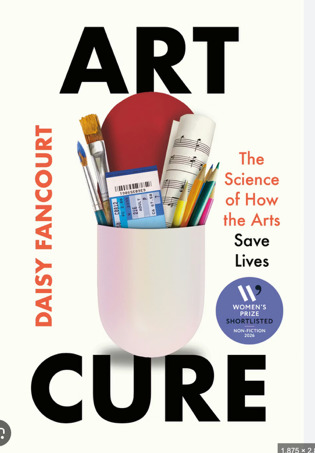
Art Cure: The Science of How the Arts Save Lives
By: Daisy Fancourt
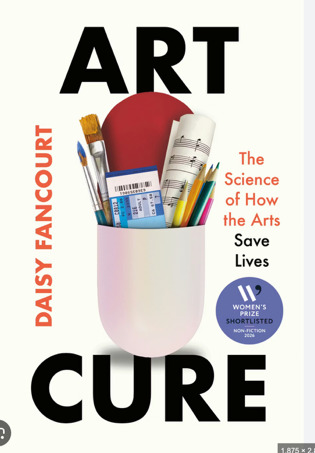
Macmillan Publisher, Celadon Books New York, NY 2026
309 Pages, Hard Cover $28.99 U.S. $40.99 Canada
ISBN: 978-1-250-3653-1
In today’s efforts to reposition the arts as an essential, integral part of society rather than a luxury, Daisy Fancourt’s “Art Cure” provides scientific evidence for the importance of integrating the arts into various aspects of daily life. I chose the term “repositioning” because the arts have been a fundamental part of our society since the beginning of time. Creative expression has long served as a vital means of connecting our communities. From the cave drawings in El Castillo and Chauvet, dating back 43,000 years and offering evidence of shared intergenerational meaning-making and creative expression of our inner worlds, to the music prescribed in ancient Greece, where patients experiencing illness were encouraged to attend healing musical performances, the arts have consistently played a crucial role (Dobrzynska et al., n.d.; May & Goldhahn, 2021). The 4th-century BCE Daoist philosopher Zhuangzi suggested that engaging in creative flow and letting go of rigid rationality leads to satisfaction and increased agency (Wong, 2023). “Art Cure” serves as a timely reminder that what our ancestors understood across cultures and centuries is now validated by science.
If you have not yet encountered Daisy Fancourt’s work on the arts, health, and well-being, this book is the best place to start. A Professor of Psychobiology and Epidemiology at University College London, she has a robust body of work spanning randomized controlled trials, large-scale longitudinal studies, and systematic reviews. An Oxford graduate who worked in the NHS at Chelsea and Westminster Hospital on arts and clinical innovations before completing her doctorate in psychoneuroimmunology at UCL, she brings a rare triple fluency to this work: she understands the arts from the inside, the clinical world from experience, and the science with rigour. She is listed by Clarivate as one of the most highly cited and influential scientists in the world. As the recently appointed UNESCO Chair in Arts and Global Health, Fancourt has brought the arts into the “room where it happens” in mainstream policy conversations. With Art Cure, she presents a strong argument that engaging with the arts in schools, workplaces, clinics, and communities has the power to change us “for good”.
From the first page, Fancourt takes us on an engaging journey. This includes scientific evidence from a multitude of perspectives and populations, coupled with case studies, personal stories, and examples that ignite the creative process. As such, she provides opportunities for application through the “daily dose” section at the end of each chapter, offering ways for her readers to integrate the arts into their daily lives. The book closes with a quite literally “food for thought,” encouraging her readers to “experience art as you experience food,” and weaving in a call to action to support our artists and make the arts accessible to all.
CHAPTERS 1& 2: ARTS FOR WELL-BEING & ARTS FOR MENTAL HEALTH
In Chapter 1, Fancourt discusses dopamine’s role in how the arts chemically make us happy. It is not only the act of engaging with art, such as the feeling of awe when looking at a beautiful picture, but also the anticipatory response she calls the “tension arc”: the suspense in a film or the anticipated changes in music. As a career fitness instructor, I had always equated movement with boosting endorphins and never fully appreciated music’s direct contribution to our physiology through dopamine. Yet creating the perfect playlist is a significant part of a fitness instructor’s job; the science was there all along. Take the song Clarity by Zedd, Foxes: the long build-up creates the “tension arc,” the beat drops, and then, BOOM, the crescendo. Everyone spins in unison to the beat, experiencing what Fredrickson (2013) calls positivity resonance, the shared joy of moving together. With endorphins, dopamine, and positivity resonance combining, it is no wonder they were all smiling through the exertion. The well-being improvements of those engaging in the arts go beyond the individual; from a systems perspective, Fancourt reports that the arts significantly decrease the financial strain on our health systems, to the tune of £255 million for the NHS alone.
Chapter 2 addresses how the arts are instrumental in supporting mental health. Through the arts, we can express our emotions when words fail, allowing the unconscious to become conscious, a psychodynamic process used in some art therapy practices. Fancourt offers a welcome nod to art therapists as accredited and trained psychotherapists, equipped to provide the most clinically appropriate art intervention for each situation. As an art therapist who once worked on an inpatient child psychiatric ward, I understand the importance of matching the art material to the clinical need. It is not just art that is important, but the type of art provided. For children experiencing major mental illness, severe ADHD, anxiety, depression, or psychosis, containment is essential. A coloring page with clear boundaries, age-appropriate for their abilities, can offer a sense of mastery and support self-esteem. While playdough is a favourite among children, as an unstructured material it can be highly regressive and may require art therapists to introduce containing prompts, like cookie cutters, to establish boundaries and support emotional regulation. Fancourt moves beyond pathology and discusses how the arts not only address illness but also actively support human flourishing, contributing to meaning-making, engagement, and accomplishment, as three of the five pillars of Seligman’s (2011) PERMA model of well-being.
CHAPTERS 3 &4 ARTS FOR BRAIN HEALTH & ARTS FOR MOVEMENT
From in utero to late life, Chapter 3 explores how the arts benefit our cognitive development and debunks the right-brain vs. left-brain concept, which posits that creativity is exclusively in the right brain. Music listening, for example, engages the whole brain, improving neuroplasticity. By applying music across all life stages and conditions, from infancy and language development to educational attainment and dementia, the evidence points to meaningful cognitive benefits at every stage of life. While the arts may contribute to brain health, Fancourt notes that they also provide coping skills for managing depression and anxiety related to dementia. My father was an artist, and even with his Parkinson’s tremors, he continued to carve wood while listening to classical music at his workbench. Even though Parkinson’s made it challenging to carry out the activities he loved most, singing and woodcarving, I would still find him chipping away at his workbench. Later in life, he commented on how the arts played a significant role in managing his emotions around the disease.
Chapter 4 turns to movement, exploring how the arts can decrease motor problems and improve physical function. For those living with Parkinson’s, where gait is significantly impacted, interventions such as dance have demonstrated clinically meaningful improvements. Fancourt explains how listening to music improves stride length by serving as a natural metronome, with our bodies synchronizing instinctively to the right beat, thereby making tempo an intervention in itself. Here, the mind and body work in tandem, the brain responding to rhythm, the body following suit.
CHAPTERS 5 & 6 ARTS FOR STRESS AND PAIN & ARTS FOR HEALTH BEHAVIORS
Fancourt’s thorough examination of how the arts help reduce the body’s stress response explains the physiological mechanisms by which creative engagement activates the parasympathetic nervous system. The comprehensive explanation feels both familiar and fresh for practitioners working in clinical settings, offering more expansive insights. When working in a juvenile detention center, a variety of art activities for emotional regulation and anger management were essential tools in preparing for their discharge and successful reintegration into the community. From individual response to societal wellbeing, Chapter 6, the discussion from the individual nervous system to social behavior. This chapter illustrates how the arts can diminish antisocial behaviour and foster prosocial connections. This includes examples such as listening to music to reduce aggression and poetry that promotes altruism and a sense of shared humanity. For those working at the intersection of the arts, justice, and well-being, this chapter feels particularly significant.
CHAPTERS 7 & CODA: ARTS FOR LONGEVITY & CALL TO ACTION
By Chapter 7, Fancourt has saved perhaps her most illuminating evidence for last: the arts do not merely enrich our lives but extend them. From decreasing blood pressure and regulating our respiratory systems to actually changing our DNA and how our genes are expressed, the science here is impressive. She discusses how drumming reduces inflammation and how music increases the expression of genes associated with the formation of new neurons. At this point, the reader is fully convinced that art is not merely the fountain of youth; it is, as the title promises, the cure.
Which brings us to Coda’s central question: if the evidence is this robust, why aren’t we doing more? Early in my career as an art therapist hired as a school-based clinician at a middle school, I was told when I requested supplies: “You were hired as a clinician; if you need art supplies to do your job, that is on you.” Earning $24,000 a year, I found this impossible. They then placed me in a supply closet, shared with cleaning solutions and a year’s worth of Xerox paper, and called it my office. Why is the value of the arts so frequently called into question? According to the National Arts Education Status Report, over 3.6 million students in US public schools lack access to music education, with cuts falling disproportionately along racial and economic lines (Morrison et al., 2022), deepening the divide over who has access to the arts and who does not. Fancourt’s conclusion is a stark reminder that the arts do not need defending. They need resourcing and prioritization, and they should be treated not as a nice-to-have but as a necessity, accessible to all.
CONCLUSION
Art Cure is an essential read for coaches, practitioners, clinicians, educators, arts therapists, art advocates, policymakers, and anyone committed to human flourishing. Fancourt’s comprehensive evidence base is compelling, accessible, and timely. If there is one area where the conversation feels ripe for expansion, it is the relational and community dimensions of arts engagement, particularly how the arts foster connection, psychological safety, and shared meaning within teams and communities. This is not a gap so much as an invitation. As someone currently investigating how a daily creative arts practice can enhance relational well-being in workplace teams, I found myself reading Art Cure not only as a reviewer but also as a fellow researcher, recognizing the potential for our work to be in conversation. In response to Fancourt’s call to action, I am encouraged not to throw away my shot, to press forward with my research (Friberg & Giraldez-Hayes, 2024), and to contribute to this vital conversation. If we all work in tandem, I believe we are unlimited in what we can achieve through the arts.
BOOK REVIEWER
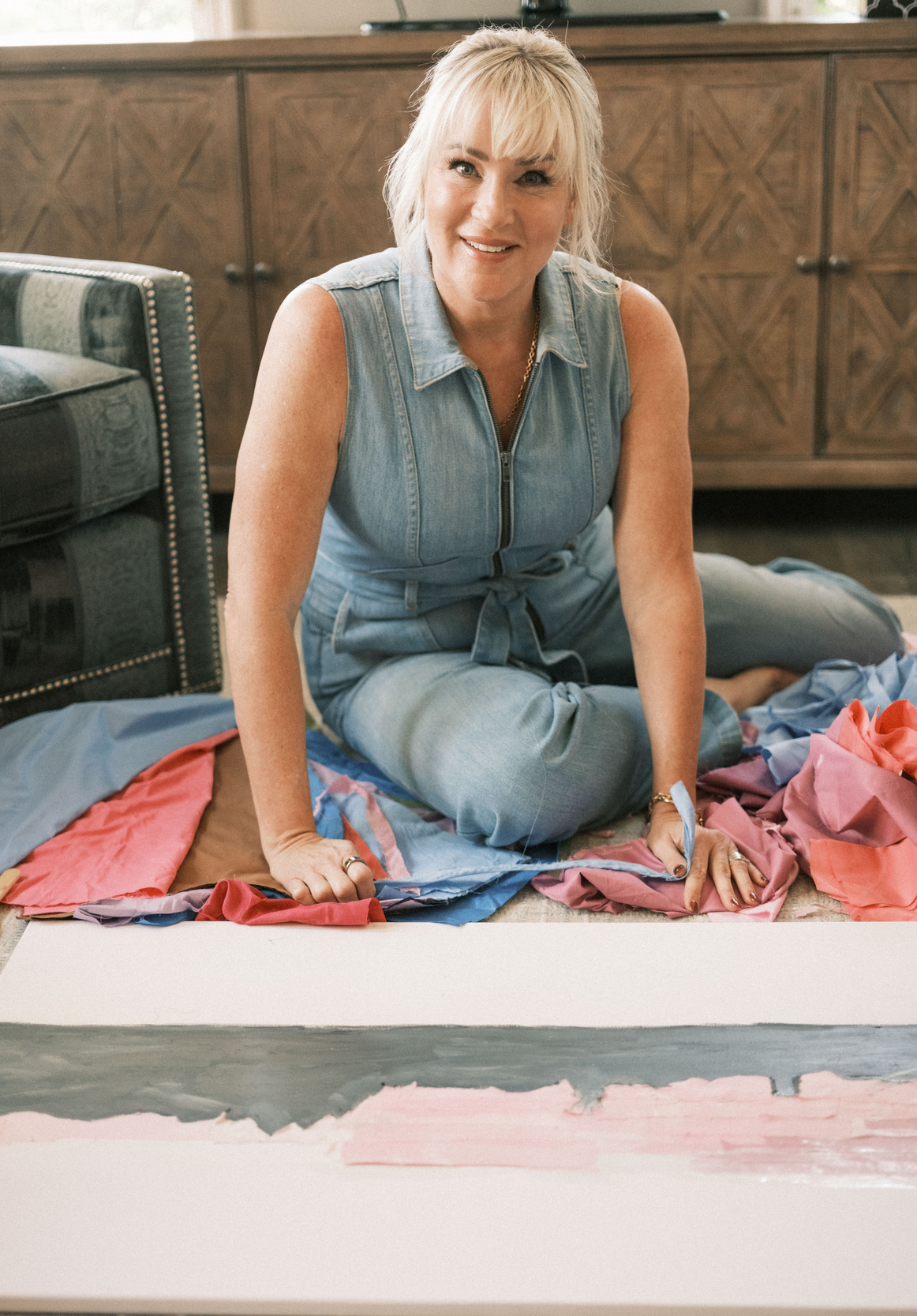
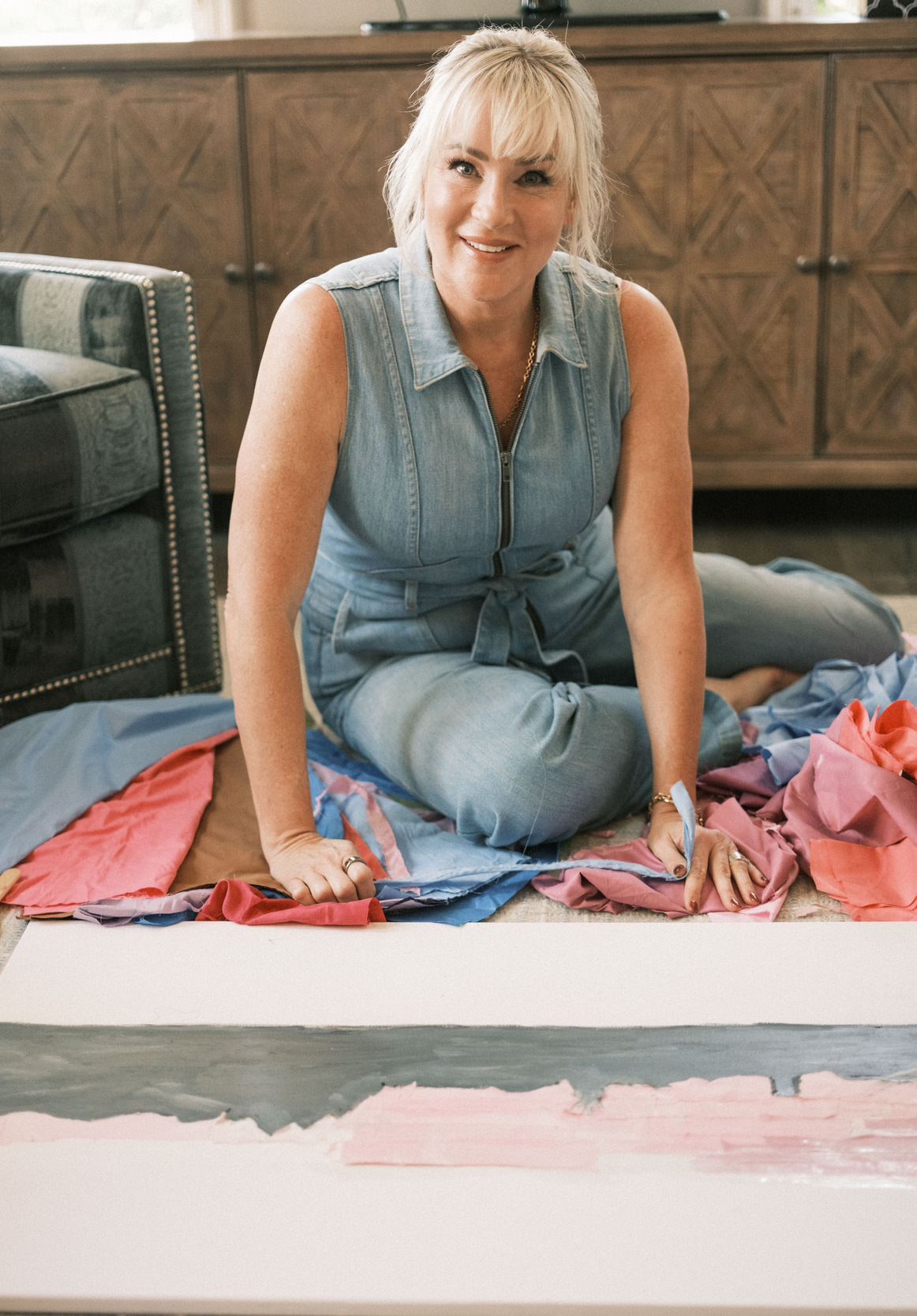
Patricia Friberg is a positive psychology practitioner, art therapist, and doctoral candidate at Middlesex University, where her research explores how daily engagement in creative arts enhances relational wellbeing, psychological safety, and human flourishing in workplace teams. She holds postgraduate degrees in Applied Positive Psychology and Coaching Psychology (University of East London) and Creative Arts Therapy (Pratt Institute), and is a Board-Certified Health and Wellness Coach and Associate Certified Coach (ICF). Her peer-reviewed publication, “Creative Arts and Human Flourishing: A Thematic Analysis of Leaders Engaging in a 21-Day Creative Arts Intervention” (Friberg & Giraldez-Hayes, 2024), has been presented at leading international conferences, including the International Positive Psychology Association and the American Art Therapy Association.